
Project Introduction
Coleman Construction & Utilities Limited successfully delivered a complex civil engineering package supporting the major upgrade of Tunbridge Wells Wastewater Treatment Works.
Working on behalf of CMDP JV, the team completed extensive excavation, reinforced concrete works, deep drainage installation, and significant modifications to live operational assets. Through meticulous planning, collaborative working, and coordinated stakeholder engagement, all works were safely delivered within the programme.
Scope of Works
Coleman Construction & Utilities Limited delivered a comprehensive programme of civil engineering works, including:
- Bulk excavation for the new inlet works and Final Settlement Tank (FST)
- Construction of reinforced and precast concrete chambers
- Installation of deep drainage (DN600 and DN450 pipework)
- Installation of smaller diameter pipework (DN450–DN100)
- Construction of drainage manholes
- Roadway extension and hardstanding construction
- Installation of site‑wide ducting and draw pits
- Delivery of new reinforced concrete structures
All works were undertaken within a live wastewater treatment facility, requiring precise planning to maintain full operational continuity.
Inlet Works Modifications
The inlet works area presented complex engineering and logistical challenges due to restricted access and critical live assets. Elevated winter flows prevented the initial planned cut into the existing channel, requiring resequencing and out‑of‑order working to maintain programme progress.
Key measures implemented included:
- Detailed planning sessions with client and stakeholders
- Design amendments to allow flows to be temporarily diverted
- Multiple carefully coordinated shutdowns for safe tie‑ins
- Fabrication of a bespoke cross‑piece pipe fitting, engineered to match older Table D flanges with newer PN16 systems
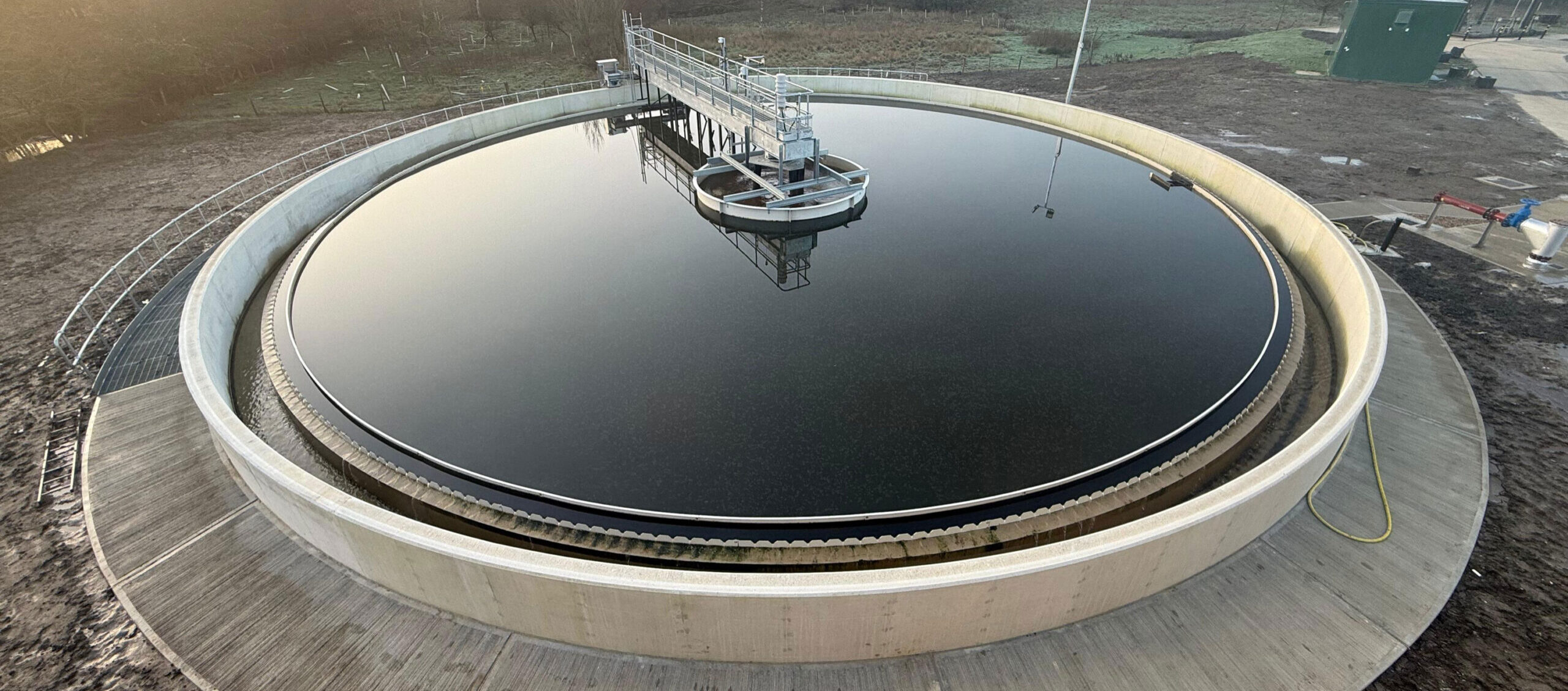
Final Settlement Tank (FST) Construction
Construction of the new FST required extensive controlled excavation and careful management of existing assets. Early works included diverting a rising main and installing temporary Legato block walls to ensure protection of adjacent live services.
Key construction stages included:
- Excavation to piling mat level followed by installation of 39 structural piles
- Pile cropping and excavation to formation
- Construction of the tank hopper using 4m diameter precast manhole rings
- Precision formation grading, sub‑base preparation, steel fixing, shuttering
- Pouring of a 230m3 concrete base in a single continuous operation using a 48m boom pump
- Tank wall construction using a bespoke Doka formwork system, cast in four quarters, each requiring three pours
Following construction, the tank underwent and passed full hydrostatic testing, enabling commissioning in line with programme requirements.
Pipework Installation
Pipework for feed and desludge systems was connected to infrastructure previously installed for future expansion. Temporary works were deployed throughout, including sheet and frame systems, with vacuum excavation used to safely manage interfaces with existing services.
Highlights included:
- Deep excavations up to 5 metres
- Support of live DN500 and DN450 pipelines using Groundforce beam systems
- Installation of DN600 feed pipework and DN350 desludge pipework
- Construction of a new flow‑meter chamber using 1800mm manhole rings
- DN450 feed pipework from existing FST3
- Core drilling into existing assets during coordinated shutdowns
- Installation of DN250 RAS pipework from the screw pump to the anoxic tank
Ductwork Installation
Site‑wide ducting was installed using 150mm twin‑wall ducting, complemented by Cubis RapidStak draw pits. This new infrastructure supports ongoing and future electrical and controls upgrades across the treatment works.
Challenges and Solutions
This project demanded innovative engineering, safe systems of work, and adaptive planning. The Coleman team successfully addressed multiple constraints through:
- Temporary works designs for deep excavations and service supports
- Structural stability designs for reinforcement and formwork systems
- Safe execution of excavations up to 5m deep
- Careful planning around restricted access and live inlet works areas
- Coordination of multiple site changeovers for critical tie‑ins
- Crane‑assisted installation of reinforcement cages and FST formwork
All pipework was fully tested using water‑drop methods prior to commissioning, and deep excavation activities were completed with zero incidents, highlighting the effectiveness of the project’s safety culture.
Project Outcomes and Benefits
The successful delivery of the Tunbridge Wells WTW upgrade reflects Coleman Construction & Utilities Limited’s capability to execute technically demanding civil engineering works within live operational environments.
Key outcomes include:
- Safe completion of all works within programme
- Seamless integration with existing wastewater assets
- Strong collaboration with CMDP JV and Southern Water
- Proactive stakeholder communication throughout
- A non‑confrontational commercial approach, prioritising partnership working
- Continued commitment to health, safety, and wellbeing, achieving zero harm
- Delivery of high‑quality, snag‑free workmanship